
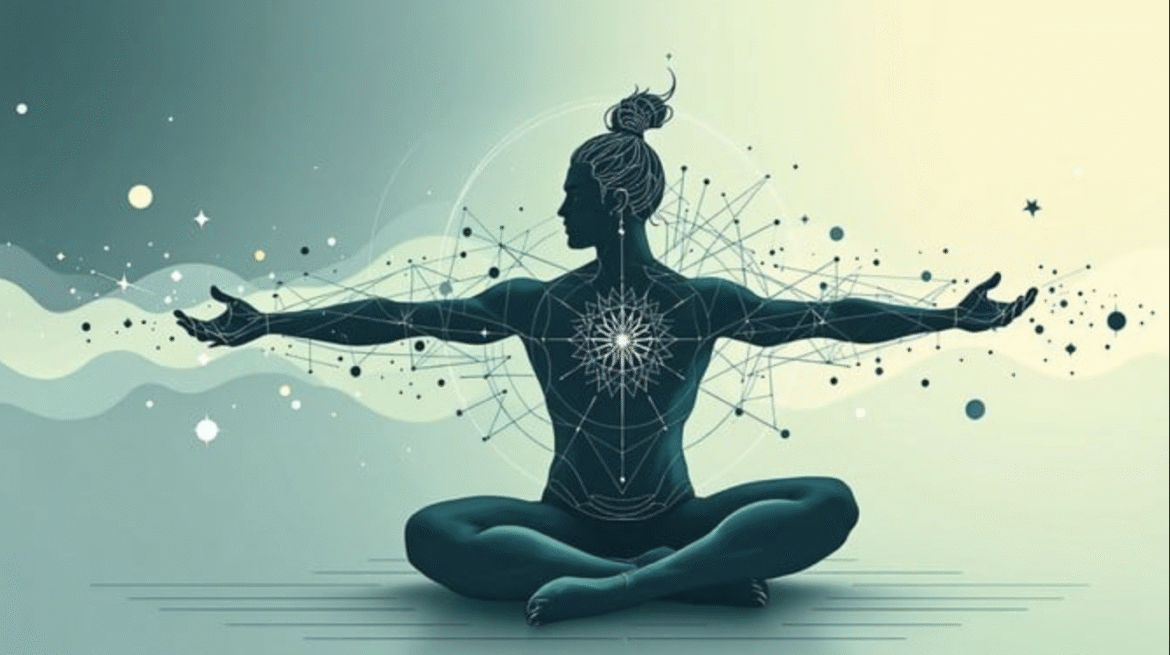
The Hindu-Vedic answer to destiny, free will, effort, and liberation.
You’ve heard it many times:
- “It’s karma.”
- “Whatever is destined will happen.”
- “Things unfold the way they are meant to.”
So a sincere question arises: If karma decides everything, why should we try at all? Why pray, why heal, why work, why make choices?
This question isn’t modern. It is ancient. Arjuna asked it in the Bhagavad Gita. Rishis debated it in the Upanishads. Śaṅkara clarified it in commentaries. Yoga, Sankhya, Nyaya, all addressed it.
And the answer is profound: Karma shapes the field. Free will shapes the move. Self-awareness shapes the outcome. Grace shapes the liberation.
Let’s break it down.
What Karma Actually Means (Not What Pop Spirituality Says)
“Karma” doesn’t mean fatalistic destiny. “Karma” means cause and effect operating across time.
In the Vedic worldview, karma has 3 layers:
1. Sanchita Karma
All the accumulated actions of your past lives.
2. Prarabdha Karma
The slice of karma allotted for this lifetime, your body, family, major life themes, challenges, blessings.
3. Kriyamana / Agami Karma
The karma you are creating right now through choices, desires, thoughts, discipline, and actions.
Here is the key: Prarabdha is fixed, but Kriyamana (your present actions) are in YOUR control.
Destiny gives you a starting point. Your free will shapes the journey.
Karma Is the Terrain, Not the Walk
Swami Vivekananda explained it perfectly:
“Karma is the result of past actions, but free will is your present capacity to act differently.”
Your karma may give you:
- a mountain
- a desert
- a river
- a storm
- a forest
- a battlefield
- a palace
But how you walk it, with awareness or ignorance with courage or surrender with ego or devotion, is entirely up to you.
Karma gives you the field. Free will decides the next step.
If Karma Decides Everything, Why Does the Gita Ask Us to Act?
Because karma does not dictate your effort. Only your circumstances.
Krishna says:
“Karmanye vadhikaraste
ma phaleshu kadachana”
“You have control over your actions, never over the results.”
Meaning:
- The effort is yours.
- The result is karma’s domain.
So effort is never wasted. Even if the outcome is different, your consciousness evolves.
Action purifies. Effort evolves. Discipline refines. Awareness liberates.
This is why inactivity is considered tamasic (dark, dull, regressive). And right action is karmayoga.
Why We Must Act Even If Outcomes Are Karmic
There are 5 reasons given in Vedic philosophy:
1. Because Action Is Your Dharma
Dharma means the natural order, duty, rhythm of existence. Nothing in the universe is inactive.
- The sun moves
- Atoms vibrate
- Rivers flow
- Trees grow
- Bodies breathe
In the Gita, Krishna says:
“Even I do not remain inactive for a moment.”
Inaction goes against the nature of existence.
2. Because Not Acting Also Creates Karma
People think doing nothing is neutral. Wrong. Avoidance is also karma. Fear is karma. Running away is karma. Silence is karma.
Every thought, intention, avoidance, desire, and choice generates consequence. You cannot escape action.
So the question is not: “Should I act?” but “How consciously should I act?”
3. Because Effort Changes Your Future Karma
Your present choices shape your future destiny. Just because some things are fixed, does not mean everything is fixed. Pain may be destined. But how long you stay in it isn’t. Love may be destined. But whether you choose it or sabotage it isn’t.
Opportunities may be destined. But whether you show up for them isn’t. Prarabdha is fixed. Kriyamana is flexible. This is where transformation happens.
4. Because Inner Growth Depends on Effort
Karma cannot change your outer situation if you do nothing to shift your inner self.
The Upanishads say:
“The one who strives, finds.”
Effort creates:
- clarity
- discipline
- willpower
- awareness
- maturity
- compassion
- resilience
Without discipline, nothing grows not the mind, not the soul, not the destiny.
5. Because Liberation Is Only Possible Through Self-Awareness
Moksha (liberation) is not granted by karma. It is granted by self-realization.
And self-realization requires:
- effort
- inquiry
- meditation
- discipline
- detachment
- devotion
- discrimination (viveka)
So even if your circumstances are karmic, your liberation is your own doing. Grace meets effort. Never laziness.
The Real Secret: Karma Determines the Setup. Free Will Determines the Strategy. Grace Determines the End.
Your birth is karma. Your decisions are free will.
Your awakening is grace.
All three operate simultaneously. Karma is not a prison. It is a curriculum. Free will is not absolute. But it is real. Grace is not random. It is earned through sincerity.
Why Doing Nothing Is the Worst Spiritual Mistake
When you say:
- “Let destiny decide.”
- “If it’s meant for me, it will come.”
- “The universe will do everything.”
This is ignorance disguised as spirituality.
The Gita calls this attitude: Pramada (negligence) and Tamas (dark inertia)
This leads to:
- spiritual laziness
- avoidance
- fear
- stagnation
- karma accumulation
You break karma through awareness, not passivity.
So What Should You Actually Do?
Here is the Vedic formula:
1. Act with full sincerity
Effort is your offering.
2. Release attachment to results
Results belong to karma.
3. Accept the present as prarabdha
The situation is karmic, but your response is free will.
4. Choose intention over impulse
Consciousness determines karma’s impact.
5. Walk the path of dharma (your right actions)
Dharma lessens karmic burden.
6. Practice self-awareness daily
Awareness burns karma like fire.
7. Remember: karma is real, but not final
Karma is powerful. Consciousness is more powerful.
Conclusion:
You are not a victim of karma, you are a participant in it. Karma shapes your life, but your effort shapes your karma. This universe is not fatalistic. It is participatory. You are always co-creating with destiny.
So the question was: “If everything is decided by karma, why should we do anything?”
The Vedic answer:
Because your actions today become your destiny tomorrow.
Because your inner growth depends on effort.
Because dharma demands participation.
Because free will is your divine gift.
Because liberation is impossible without action.
Karma only gives you the starting point. Your soul writes the rest.
Leave a Reply